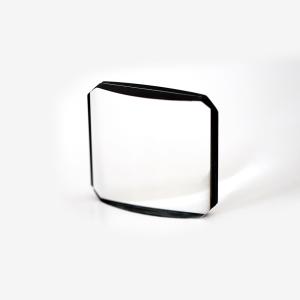
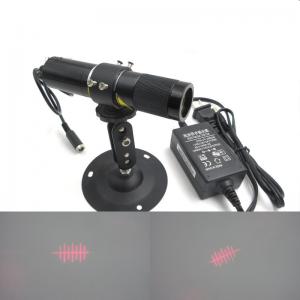
Optical Diffraction Grating – Precision Spectral Dispersion for Laser & Imaging Systems
An optical diffraction grating is a periodic microstructure that splits and diffracts light into multiple beams traveling in different directions.Types
1. Ruled Grating – Mechanically diamond-ruled on metal or glass; cost-effective for general spectroscopy.2. Holographic Grating – Produced by laser interference patterning; very low stray light, ideal for fluorescence and Raman.
3. Blazed (Echelle) Grating – Angled groove facets concentrate most energy into a single order; used in high-efficiency monochromators and astronomy.
4. Transmission Grating – Light passes through; compact, used in laser line pickups and OEM sensors.
5. Reflection Grating – Most common in spectrographs; can be mounted in Littrow or Czerny-Turner configurations.
6. Custom / Coated Grating – UV-grade fused silica, IR materials (ZnSe, CaF₂), or metallic (Au/Al) coatings for specific wavelength bands from 190nm to 14µm.
Features
- High spectral resolution (R up to 10⁵+ with echelle types)
- Groove density: 100–2,400 lines/mm
- Efficiency: 60–95% peak (blazed/holographic optimized)
- Low polarization dependence (holographic) or high efficiency in selected order (blazed)
- Available in UV, VIS, NIR, and IR versions
- Substrate options: BK7, fused silica, quartz, ZnSe, Ge, CaF₂
Typical Applications
- Spectrometers & Monochromators – Material analysis, chemical identification, plasma diagnostics
- Raman & Fluorescence Microscopy – Holographic gratings minimize stray light for ultra-weak signal detection
- Laser Systems – Wavelength tuning, pulse compression (chirped gratings), mode-locking, OPO pumping
- Telecom – DWDM multiplexing/demultiplexing (transmission gratings)
- Astronomy – Echelle spectrographs for stellar composition and radial velocity measurement
- Machine Vision & Machine Sensing – Laser line spectral filtering, barcode/spectrum sensors
- Education & Metrology – Wavelength calibration (e.g., Hg-Ar lines), optical bench experiments